





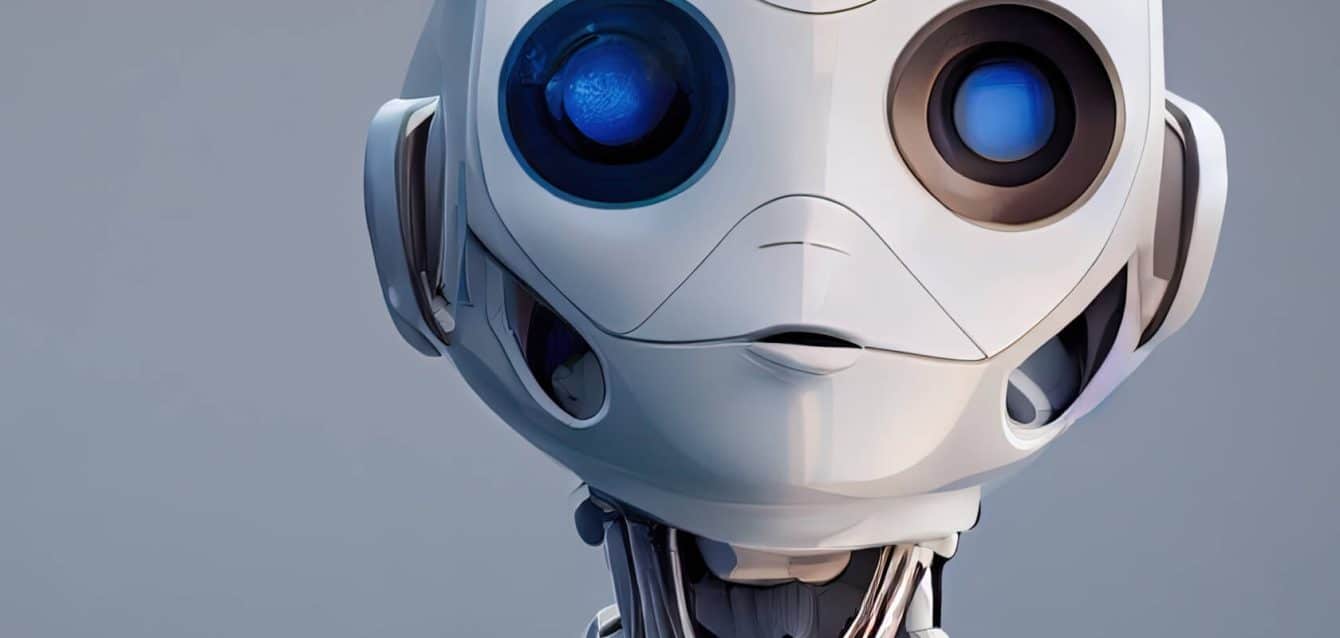
The convergence of artificial intelligence (AI) and robotics is transforming the very fabric of how work is performed, optimized, and scaled. Long relegated to structured environments like assembly lines, robots are now becoming intelligent collaborators, adapting to unstructured settings, interpreting human intent, and learning in real time.
As AI technologies evolve, the next frontier is not just automation, but augmentation — where humans and machines operate as dynamic teams.
From Industrial Robotics to Cognitive Agents
Traditional robotics systems were deterministic: they executed predefined routines with precision, but lacked perception and adaptability. Today, AI is infusing robotics with capabilities such as:
Computer Vision for object detection, tracking, and recognition
Natural Language Processing for understanding verbal commands
Reinforcement Learning for real-time adaptation and optimization
Sensor Fusion for navigating complex physical environments
Robots are no longer just tools — they are evolving into agents capable of perception, reasoning, and interaction.
Robots are becoming teammates, not tools. And the success of tomorrow’s enterprise will depend on how well they collaborate with people.
— Dr. Marita Zimmermann, Robotics Ethicist
AI as the Brain of the Machine
AI plays the central role of the “cognitive layer” within robotic systems. Depending on the use case, this intelligence may reside:
On-board (edge AI for real-time decisions)
In the cloud (centralized models with high processing power)
Or in hybrid architectures using 5G and distributed inference
These intelligent systems can:
Classify and segment objects
Plan paths dynamically
Respond to human gestures
Detect anomalies or hazards
Learn from demonstrations or feedback loops
Applications in Enterprise Environments
The integration of AI and robotics is revolutionizing sectors far beyond the manufacturing floor:
Healthcare
Surgical robots with AI-assisted precision
Service robots in hospitals for delivery, disinfection, and patient monitoring
Elder care companions with adaptive behavior and emotion detection
Logistics & Warehousing
Autonomous mobile robots (AMRs) for material transport
Robotic picking systems powered by computer vision
Dynamic routing and fleet orchestration via AI agents
Construction & Infrastructure
3D printing robots for large-scale structures
Inspection drones with anomaly detection models
Collaborative robots (cobots) handling hazardous tasks
Office & Knowledge Work
Robotic Process Automation (RPA) + Generative AI for back-office workflows
AI-powered robotic agents for IT operations (AIOps)
Human-robot collaborative assistants in smart workspaces
Human-Robot Collaboration: The Real Game-Changer
The real promise lies in collaboration, not replacement. In shared workspaces, collaborative robots (“cobots”) are designed to operate safely alongside humans, responding to intent, adjusting force, and respecting spatial awareness.
Key enablers include:
Voice & gesture recognition
Shared control models (human + AI decision-making)
Adaptive planning based on human behavior
Explainability and transparency in robotic actions
These systems foster trust, which is essential to successful adoption.
Governance, Safety, and Ethics
As robots gain autonomy, new challenges emerge:
How do we ensure safety in dynamic environments?
What level of decision-making can be delegated to machines?
How do we govern AI-robotic systems in compliance with evolving regulations?
AI governance frameworks must expand to include cyber-physical systems, addressing:
Safety verification of learning models
Fairness in task assignment and delegation
Human oversight and escalation mechanisms
What’s Next: Swarm Robotics, Soft Robotics, and Embodied AI
The frontier is already moving toward:
Swarm intelligence for distributed, self-organizing robot collectives
Soft robotics for safer interaction with humans and sensitive materials
Embodied AI: integrating memory, emotion, and environmental feedback into robot behavior
This evolution leads us to a world where machines don’t just operate — they coexist, learn, and co-create.
Secloudis Perspective
At Secloudis, we view AI and robotics not as isolated technologies, but as interconnected enablers of next-generation enterprise systems. We help organizations architect human-machine collaboration by integrating:
Intelligent perception and control
Ethical and secure deployment models
Scalable, cloud-native robotics platforms
Automation is no longer about doing more with less — it’s about doing better with both humans and machines.